Column · @trentonwzzf438
Peptide Quality Assurance & Purity Testing Boc Sciences
Recognizing Peptide Pureness Testing
Apex Laboratory is a specific distributor of high-purity chemical reagents and peptides. All products provided are strictly for in-vitro laboratory r & d utilize just. Discover front runner research study peptides with batch-specific COA paperwork and HPLC/MS confirmation. Products are for in-vitro research laboratory study use only and are except human consumption.An example could generate a clean-looking chromatogram with one dominant optimal and still be the incorrect compound if identification was never validated. HPLC steps splitting up and family member peak area; mass spectrometry actions mass-to-charge habits that can be utilized to verify molecular identity. Peptide purity testing is the procedure of validating that a peptide sample contains only the intended sequence-- and no substantial impurities or byproducts from synthesis. Because peptides are produced through intricate chemical processes, trace impurities can form normally. Testing enables researchers to comprehend exactly what remains in the vial, verifying both identification and top quality. Picking a trustworthy third-party lab is key to getting dependable peptide validation outcomes.
Residuals Testing
- For experimental preparation (like computing molar concentrations), both purity and internet web content serve numbers, but purity is what reflects the chemical homogeneity of the peptide sample.
- The injector presents a specific quantity of example right into the mobile-phase stream.
- Nonetheless, for total top quality assessment or the characterization of peptides for a selection of applications, added logical examinations are advised.
Desalted peptides work well for ELISA coating, some Go to this website cell-based assays, and applications where modest pureness serves. After synthesis and filtration, peptides are normally lyophilized (freeze-dried) as salts. One of the most usual counterion is trifluoroacetate (TFA) from the HPLC purification solvents, though some peptides are provided as acetate or hydrochloride salts. These counterions aren't "impurities" in the HPLC sense-- they don't turn up as different optimals-- yet they do contribute to the complete mass of the powder.
Gauging peptide purity is commonly made with analytical high-performance fluid chromatography (HPLC), often combined with mass spectrometry (MS) for identification confirmation. These analytical techniques are conventional in peptide quality control and you will certainly often receive HPLC and MS information with a research peptide order. The primary logical approaches for peptides include liquid chromatography (LC), normally HPLC, combined with mass spectrometry (MS) for accurate molecular weight determination and sequence validation.
Support
Peptide purity describes the quantity of the appropriate peptide in the peptide product. Nonetheless, for overall top quality assessment or the characterization of peptides for a variety of applications, extra analytical examinations are recommended. For example, in order to make sure Peptide Industry success in numerous peptide experiments, it might be necessary to get rid of trifluoroacetic acid (TFA), or to examine the solubility of hydrophobic peptides prior to carrying out the needed experiments. During the discovery, we utilize RP-HPLC combined with MS to determine the molecular weight of the peptide. The outright amount of the proper peptide in an example is the item of the peptide content and the peptide purity. BOC Sciences has a top-tier peptide high quality testing system, integrating innovative logical modern technologies and premium instrumentation to supply specific and effective peptide quality assessment solutions.
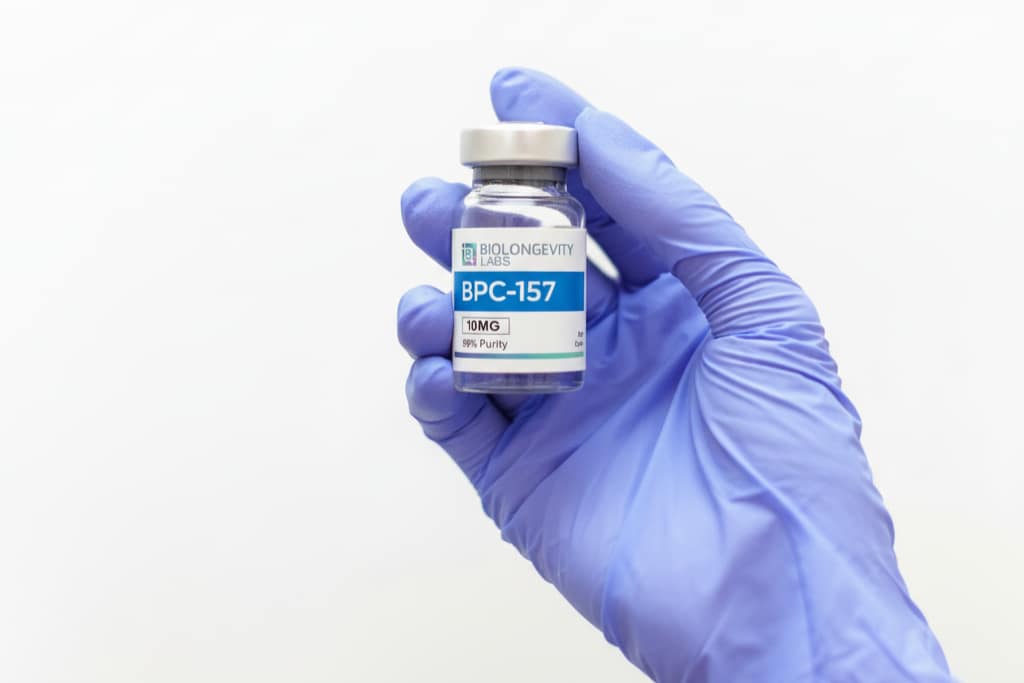

The most rigorous quality, involving cautious HPLC filtration-- occasionally several rounds-- and extensive QC. Required for measurable studies, architectural biology, in vivo research study versions, and any kind of application where even small amounts of pollutant might impact results. This is the grade where the cost increases most greatly, because achieving that last 1-- 3% of purity calls for disposing of a considerable fraction of the synthesized material. A deletion peptide missing out on a single residue may still bind to the very same receptor, but with various fondness or selectivity. In concentration-response experiments, these impurities can change contours, squash plateaus, or present biphasic behavior that obscures the true activity of the target compound. The isoelectric point (pI) is an important parameter for understanding peptide solubility and behavior in numerous settings.
Examinations can be carried out utilizing high-precision stabilization chambers, imitating various atmospheres, and applying international criteria to research temporary and long-term security, important for constant peptide performance. Some peptides fail not since the sequence is incorrect, but because their physical actions in actual solvents is poorly understood. We supply physical residential property screening that assists teams work better with tough examples. Mass spectrometry validates whether the gauged mass matches the anticipated peptide mass. The chromatogram is the most crucial visual information aspect on an HPLC peptide test report. It is a graph with time on the horizontal axis and detector reaction, generally UV absorbance, on the vertical axis. Each peptide has a different anticipated molecular weight, so mass verification is not a common badge; it is compound-specific evidence. For a much deeper identity-focused explanation, see Mass Spectrometry Peptide Confirmation. Identity testing confirms that what was synthesized is actually the designated series.